Your Neighbor Knows How to Fix That: The Rise of Skill-Swapping Communities Across Small-Town America
The Guy Down the Street Rewired My Kitchen — I Taught His Daughter to Read Music
It sounds like something out of a different era, maybe a small farming town in the 1940s where everyone just knew everyone else's business and traded favors like baseball cards. But what's happening in communities across the US right now feels surprisingly fresh — and a little revolutionary.
Hyperlocal skill-sharing networks are popping up everywhere, from tight-knit rural towns in the Midwest to suburban neighborhoods outside mid-sized cities. Neighbors are swapping services — plumbing for piano lessons, childcare for carpentry, language tutoring for lawn care — and building something that goes way beyond just saving money. They're rebuilding the kind of social fabric that got frayed somewhere along the way.
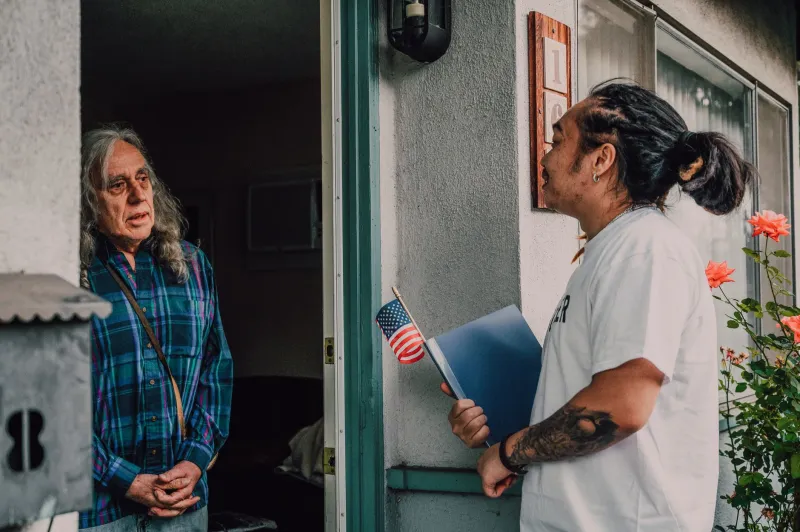
"I'd been paying $80 an hour for a handyman to do stuff that honestly took him fifteen minutes," says Renata Okafor, a single mom from Eau Claire, Wisconsin, who joined a local time-banking group two years ago. "Now I fix minor stuff around the house with skills I picked up from a retired contractor in my group. In return, I help his grandkids with college application essays. Nobody's out of pocket."
What Exactly Is a Skill Exchange — And How Is It Different From Just Doing a Favor?
Great question. The informal version — borrowing your neighbor's ladder in exchange for watching their dog — has always existed. What's changed is the infrastructure around it.
Modern skill-sharing networks operate on a few different models. Time banks are probably the most structured: participants earn "time credits" for every hour of service they provide, then spend those credits to receive help from anyone else in the network. One hour of babysitting equals one hour of tax prep help. Skills aren't ranked by dollar value — an hour is an hour, regardless of whether you're a surgeon or a seamstress.
Then there are barter circles, which are more direct trades between two people or small groups. These tend to be looser and more relationship-driven. And increasingly, mutual aid networks — which exploded in popularity during the COVID-19 pandemic — have evolved beyond emergency support into ongoing community resource pools.
Platforms like hOurworld, TimeBanks USA, and even localized Facebook groups and Nextdoor threads are giving these exchanges a digital backbone, making it easier to find the right match and keep things accountable without getting weird about it.
Small Towns Are Leading the Charge
While you might expect this kind of thing to thrive in progressive urban enclaves, the reality is that small towns are some of the most fertile ground for skill-sharing economies. And the reason makes a lot of sense when you think about it.
In smaller communities, the "gig economy" infrastructure that city dwellers rely on is often thin or nonexistent. There's no DoorDash driver around the corner, no abundance of licensed contractors competing for your business, and professional services can be expensive or hard to access. Necessity, as always, breeds creativity.
In Harlan, Kentucky, a grassroots group called the Harlan Skills Collective has grown to over 200 members in just three years. Organizer Deb Whitfield says the network started as a response to economic hardship but quickly became something people wanted regardless of financial need.
"People started joining not because they couldn't afford things, but because they wanted the connection," Whitfield explains. "There's something about knowing your neighbor — really knowing them, knowing what they're good at — that changes how you feel about where you live."
That sentiment comes up again and again in communities like this. The economic benefit is real, but the social dividend might be even bigger.
What Gets Traded? More Than You'd Think
Here's where it gets interesting. The range of skills flowing through these networks is genuinely impressive — and it busts the myth that bartering is only for blue-collar trades.
Sure, you'll find plenty of home repair, garden work, and basic car maintenance. But scroll through an active time bank listing and you'll also see:
- Language lessons (Spanish, Mandarin, American Sign Language)
- Mental health support from licensed therapists offering sessions in exchange for other services
- Financial coaching and tax help
- Creative services like photography, graphic design, and music production
- Childcare and elder care
- Cooking and meal prep, including culturally specific cuisine
- Tech support for seniors and small business owners
The variety signals something important: these networks aren't just for people who "can't afford" traditional services. They're for people who want to engage with their community in a more reciprocal, human way.
The Challenges Are Real (But Workable)
None of this is without friction. Trust is the biggest hurdle — handing someone your house key or letting a stranger watch your kids requires a level of confidence that takes time to build. Most successful networks address this through peer reviews, community vouching systems, and gradual onboarding that helps new members ease in.
Liability is another gray area. If a neighbor fixes your porch railing and someone gets hurt, who's responsible? Most networks operate on a good-faith basis and encourage members to be honest about the limits of their skills. The legal landscape around non-monetary exchanges is genuinely murky, and it's worth knowing that some time-banking credits can technically be considered taxable income by the IRS — though enforcement in informal community settings is essentially nonexistent.
And then there's the sustainability question. Volunteer-run networks can burn out coordinators, especially when growth outpaces the organizational infrastructure. The most resilient ones tend to distribute leadership early and build in regular community check-ins to keep things running smoothly.
What This Means for Small Business Owners
Here's a wrinkle worth considering: local small businesses are starting to plug into these networks too. A bakery might offer a standing weekly bread share in exchange for social media management. A yoga studio might trade a monthly class pass for bookkeeping help.
For small business owners operating on tight margins, skill exchanges can offset real costs — especially for services like marketing, IT support, or administrative help that feel like luxuries when cash is tight. And participating in a local skill network is one of the most authentic forms of community engagement a business can do. You're not just sponsoring a little league team; you're actually in the mix, trading value with the people who live and shop in your town.
The Bigger Picture
What's really happening here is a recalibration of how communities think about value. For decades, we've been trained to believe that if something doesn't have a price tag, it doesn't count. These networks are quietly pushing back on that idea.
When your neighbor teaches your kid to code, and you help her mom navigate Medicare enrollment, and someone down the block fixes her fence in return for homemade tamales — that's an economy. It's just one that runs on trust and relationships instead of credit cards and algorithms.
And honestly? It sounds like exactly the kind of community most of us have been missing.