Coffee Shops, Corner Libraries, and the Comeback of Places Where Everyone Knows Your Name

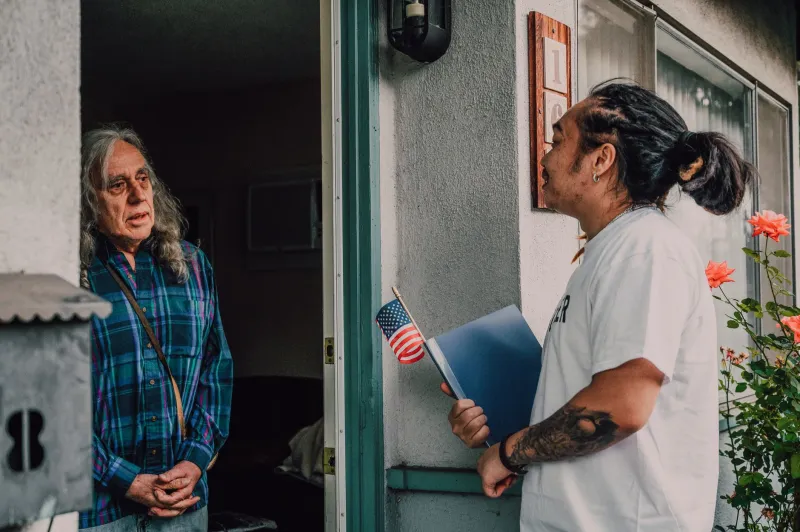
Photo by Photo by Jake Banasik on Unsplash on Unsplash
There's a coffee shop in Greenville, South Carolina where the same group of retirees occupies the corner table every Tuesday morning. A couple of blocks away, the public library hosts a weekly "community conversation" night that regularly draws thirty or forty neighbors who'd never otherwise cross paths. Neither of these things was planned by a city council or funded by a government grant. They just... happened. And that's kind of the whole point.
Sociologist Ray Oldenburg coined the term "third place" back in the 1980s to describe those informal gathering spots that exist outside of home (the first place) and work (the second place). Think barbershops, diners, bookstores, parks, and yes, coffee shops. For decades, urban planners and community researchers warned that America was losing these spaces to suburban sprawl, big-box retail, and eventually, the gravitational pull of social media. But something interesting is happening right now. They're coming back — and they're coming back with a purpose.
What Makes a Space a "Third Place" Anyway?
Not every coffee shop qualifies. Not every park bench earns the title. What separates a genuine third place from just a building people happen to visit is a specific kind of social energy. These spots are accessible, meaning you don't need a membership or an invitation. They're comfortable enough that people linger. And crucially, they're neutral ground — nobody owns the conversation, and nobody's trying to sell you anything (beyond maybe a latte).
In small-town America, third places often wear multiple hats. The local hardware store doubles as a community bulletin board. The diner at the edge of town becomes the unofficial headquarters for the youth baseball league's parent committee. The library isn't just about books anymore — it's hosting job fairs, ESL classes, and seed libraries where residents can swap garden starters.
What unites all of them is that they lower the barrier to connection. You don't have to schedule a playdate or join a formal organization. You just have to show up.
Small Towns Are Leading the Charge
If you want to see the third place revival in action, look at what's been happening in places like Traverse City, Michigan, or Bozeman, Montana, or dozens of smaller communities in between. Downtown revitalization efforts that used to focus almost exclusively on retail foot traffic are now deliberately designing for lingering. Cities are funding "pocket parks" with seating and shade. Vacant storefronts are being converted into co-working spaces with open community hours. Some towns are even partnering with local coffee roasters and bookshops to create hybrid spaces that serve as informal civic hubs.
In Marfa, Texas — population just over 1,700 — a converted warehouse now operates as a community co-working space three days a week and hosts public forums, art shows, and skill-sharing workshops the rest of the time. The space is run by a nonprofit, sustained by a mix of memberships and donations, and has become the de facto town square for a community that never really had one.
These aren't flukes. They're the result of intentional investment in what urban designers call "social infrastructure" — the physical spaces that make community life possible.
The Loneliness Problem No App Can Solve
Here's the uncomfortable truth sitting underneath all of this: America has a loneliness crisis. The U.S. Surgeon General flagged it as a public health epidemic in 2023. Roughly half of American adults report measurable feelings of isolation, and those numbers are worse in rural areas and small towns where the social fabric has thinned over decades of economic change.
Social media promised to fill that gap, and in some ways it has — you can stay connected with people across the country with a few taps. But it's proven remarkably bad at building the kind of low-stakes, spontaneous, face-to-face connection that third places provide. Bumping into your neighbor at the farmers market and talking for twenty minutes about nothing in particular does something for your sense of belonging that no algorithm can replicate.
This is where community hubs — real, physical ones — have a role that goes beyond nostalgia. They're a practical antidote.
What This Means for Your Neighborhood
You don't need a city grant or a nonprofit charter to start thinking about this in your own community. Sometimes it starts as simply as a coffee shop owner rearranging the furniture to encourage conversation. Or a librarian adding a community whiteboard where neighbors can post questions and offers. Or a local market vendor setting up a little seating area where regulars can stick around.
The communities that are doing this well share a few things in common. They've identified spaces that are already attracting people and asked how those spaces can do more. They've involved residents in shaping what the space becomes, rather than designing for them. And they've been patient — third places build their identity slowly, through repeated visits and accumulated memories.
If your town has a downtown that feels a little hollow, or a neighborhood that could use more connective tissue, the answer might not be a new app or a digital platform. It might be a comfortable chair, a good cup of coffee, and an open door.
Because when people have a reason to show up — and a place to land when they do — community has a funny way of taking care of itself.